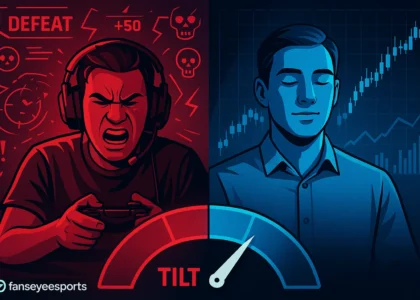


In the world of professional eSports, individual mechanical skill can only take a player so far. The teams that consistently win championships are those that operate with a deep level of strategic cohesion, guided by the master plan of their coach. The coach is the architect of the team’s success, responsible for developing game plans, drafting team compositions, and making critical in-game adjustments.
This strategic, macro-level thinking, which focuses on objectives, resource management, and exploiting enemy weaknesses, has a direct and powerful parallel in the world of forex trading. A successful trader, like an eSports coach, must have a well-defined playbook, a comprehensive strategy that guides their decisions and keeps them focused on the long-term objective of winning the game.
The Draft Phase: Selecting Your Currency Pairs
Before a competitive match even begins, a crucial phase takes place: the “pick/ban” or draft phase. The coach, in collaboration with the team, will select a composition of characters designed to work well together and to counter the likely strategy of the enemy team. This involves a deep understanding of the current “meta” and the strengths and weaknesses of hundreds of different characters.
A forex trader goes through a similar “draft phase” when they decide which currency pairs to trade. They don’t trade every market randomly. Instead, they might specialize in the “major pairs”, which are like the most popular and balanced characters in a game. Or they might focus on specific “carry trade” pairs, which is like drafting a team composition designed for the late game. This selection process requires a deep understanding of the fundamental drivers of each currency, a skill honed through the study of Fundamental Analysis.
Win Conditions and Objectives: Your Trading Thesis
Every team composition has a “win condition”, a specific set of circumstances that the team needs to create to win the game. For one team, the win condition might be to protect their star player until the late game, when they become unstoppable. For another, it might be to execute a fast-paced, early-game rush.
A trader’s “thesis” for a trade is their win condition. Before entering a position, a professional trader has a clear and articulated reason why they believe a currency will move in a particular direction. This might be based on a central bank policy divergence, a strong technical pattern, or a shift in market sentiment. This thesis provides the strategic justification for the trade and the conviction to hold it through short-term volatility.
The strategy also involves focusing on key objectives. In a game, this might be taking down an enemy tower or securing a major objective like the Dragon. In trading, an objective is a key price level, a major support or resistance level that the trader is targeting. Their strategy is built around how the price reacts to these key objectives. This objective-based approach, which is a core part of Technical Analysis, brings a clear structure to a trading plan.
In-Game Adjustments: Trade and Risk Management
No game plan survives first contact with the enemy. A great coach is able to make in-game adjustments based on what the other team is doing. If the enemy team makes an unexpected rotation, the coach will adapt the team’s strategy to counter it. This is directly analogous to trade management.
A trader might have a pre-defined profit target, but if the market is showing extreme momentum, they might decide to adjust their target to let the winner run. More importantly, if the trade moves against them and invalidates their initial thesis, they must have the discipline to cut the trade and re-evaluate, rather than stubbornly sticking to a failed plan. This adaptive mindset, combined with the discipline to cut losses, is a key component of professional Trading Psychology and Risk Management.
The VOD Review: Journaling and Performance Analysis
After a match, a professional eSports team will spend hours in “VOD review,” re-watching the game replay to analyze their mistakes and identify areas for improvement. This is the only way to learn and grow as a team. For a trader, the equivalent is the trading journal. A detailed journal, where every trade is recorded and analyzed, is the trader’s VOD review. It allows them to identify recurring behavioral errors and refine their strategy over time.
A brokerage platform that provides a detailed and easily accessible trade history is crucial for this process. A platform like the YWO trading platform, which offers a range of professional account types, provides the transparent reporting needed to conduct a thorough performance review. By adopting the strategic mindset and the disciplined review process of a professional eSports coach, a trader can elevate their performance from a series of random plays to a cohesive and winning game plan.